If you are drawn to places with front porches, walkable streets, and a strong sense of local history, Thibodaux’s historic neighborhoods may feel like home right away. You may also wonder what daily life there actually looks like beyond the charming streetscape. This guide will help you understand the rhythm of the area, the kinds of homes you may see, and the practical details to research before you buy or sell. Let’s dive in.
What defines Thibodaux’s historic neighborhoods?
Thibodaux’s historic neighborhoods are centered around the older downtown grid and the nearby residential streets that grew with the city over time. Thibodaux incorporated in 1830 and developed as a parish seat and commercial center connected to sugar cane, steamboats, railroads, and trade.
Today, that history still shapes the feel of the area. The city adopted a historic preservation ordinance in 2001 to help protect architecturally significant buildings and neighborhoods, giving the historic core a more intentional preservation framework.
The district is compact rather than spread out. Its boundaries run through the downtown core around streets such as Jackson Street, Canal Boulevard, West and East 1st Street, West and East 7th Street, East 8th Street, Church Street, President Street, and the former railroad right-of-way.
That layout matters in everyday life. It creates a small-town street-grid feel where older homes, downtown businesses, and community spaces sit close together.
Everyday life feels connected
Life in Thibodaux’s historic core tends to revolve around simple, repeatable routines. You can picture morning walks, quick stops downtown, and community events that bring people back to the same central streets again and again.
One of the clearest signs of that lifestyle is how walkable the area feels. The National Park Service offers a free weekly walking tour through downtown Thibodaux, which reflects both the area’s history and its pedestrian-friendly layout.
The downtown boardwalk adds another layer to daily life. According to the Bayou Lafourche Fresh Water District, it is an ADA-compliant walkway along Bayou Lafourche used for walking and kayaking.
That means the historic area is not just about older houses. It also offers access to public spaces where you can spend time outdoors close to downtown.
Downtown events shape the neighborhood rhythm
Historic neighborhoods often feel most alive when they have regular community activity, and Thibodaux has that built in. Thibodaux Main Street hosts recurring events such as Arts Walk, StoryWalk, the Big Boy’s Main Street Cook-Off, and Thibodaux on Tap.
These events support small businesses and create a stronger connection between downtown commerce and neighborhood life. For residents, that can mean more reasons to stay local for an evening out or a weekend stroll.
Instead of a district that only looks good in photos, this part of Thibodaux shows signs of regular use. The streets and gathering spaces are part of everyday routines, not just special occasions.
Nicholls State adds daily energy
Another part of everyday life in Thibodaux is the presence of Nicholls State University. The university is located in Thibodaux, has about 6,000 students, and sits on a 287-acre campus.
That does not mean every historic street feels like a college district. It does mean the city benefits from an additional source of activity, events, and day-to-day movement that can support local businesses and contribute to the overall energy of the area.
For some buyers, that mix is appealing. You get the character of an established community with the added momentum of a university town.
Homes have variety, not one look
One of the most important things to know about Thibodaux’s historic neighborhoods is that the housing stock is mixed. You should not expect every block to have the same style or every home to fit a single historic image.
National Park Service survey material notes that downtown has limited architectural cohesiveness because of modern infill and alterations over time. In plain terms, the area feels layered and lived-in rather than frozen in one era.
You may see Queen Anne houses, bungalows, cottages, shotguns, outbuildings, and older commercial buildings. The earliest surviving homes include Greek Revival examples, often plain cottages with simple details.
Later periods brought more decorative homes. Prosperity in the late 19th century helped produce Queen Anne Revival houses with galleries, ornamental trim, and even turrets.
Porch-centered homes anchor the area
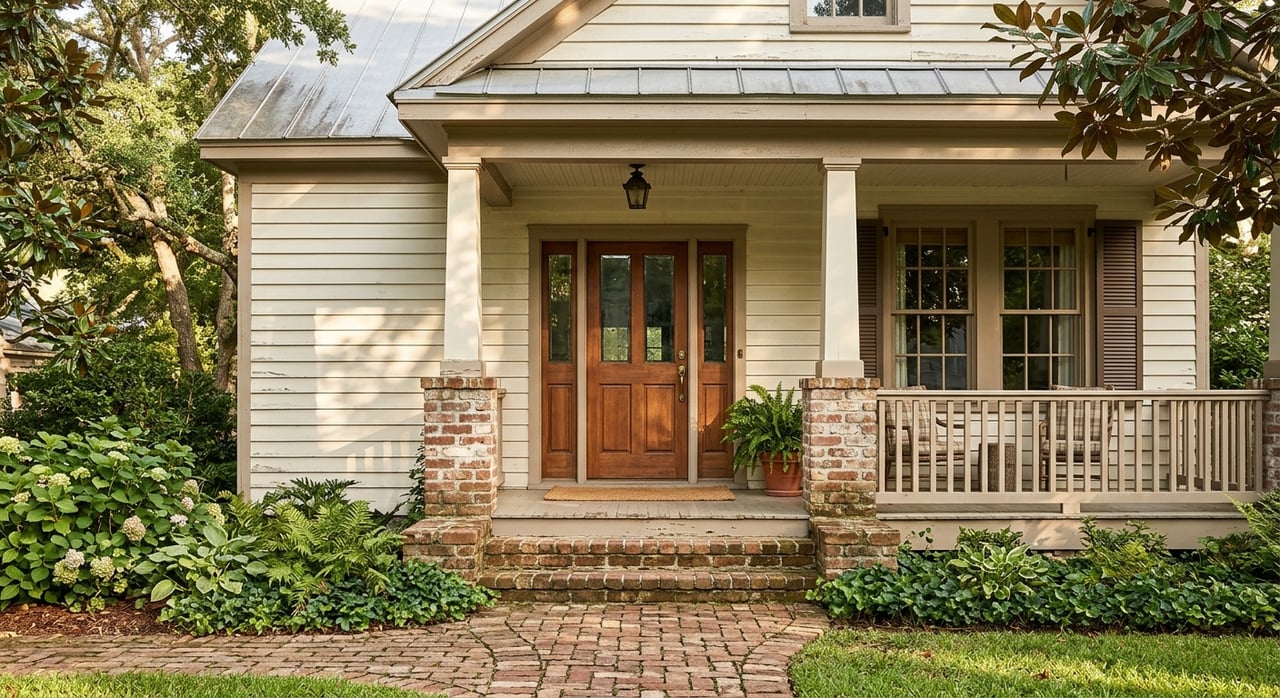
Across different styles and time periods, one feature shows up again and again in Thibodaux’s historic housing: the porch. Many of the homes in the area are frame houses with porch-centered layouts and smaller residential forms that reflect the mid-19th- through early-20th-century development of the city.
That can shape how the neighborhood feels from the street. Homes often present themselves to the sidewalk and road in a way that feels open and visible, which adds to the historic character people notice first.
The area also includes notable buildings from a wide range of years, from the c. 1845 Dansereau House to early-20th-century properties such as the Frost House and the Sidney Peltier House. Even the broader streetscape reflects that long timeline, with plain one- and two-story frame or brick stores mixed with standout Italianate, Beaux Arts, and neoclassical buildings.
Market conditions suggest a rooted community
If you are thinking about buying in Thibodaux’s historic neighborhoods, the broader market offers useful context. As of May 31, 2026, Zillow reported an average home value of $230,971, a median sale price of $195,583, 201 homes for sale, and homes going pending in about 49 days.
Redfin’s May 2026 snapshot showed a median sale price of $176,894 and an average of 116 days on market. Taken together, these figures suggest a more established market with slower turnover than a fast-moving metro area.
Census QuickFacts adds to that picture. Thibodaux has a 61.6% owner-occupied housing rate, a median owner-occupied value of $232,500, and 89.7% of residents living in the same house one year earlier.
For you as a buyer or seller, that points to a community with staying power. People tend to put down roots here, and that often affects how inventory behaves.
Historic-core inventory can be limited
The historic core can be especially hard to measure because neighborhood-level public data are thin. In May 2026, a local market page for Historic Downtown Thibodaux showed just one active home and one rental.
That kind of low listing count matters. When only a small number of properties are available, prices and days on market can shift quickly based on a single listing entering or leaving the market.
If you are waiting for the perfect historic home, patience may be part of the process. If you are selling one, limited competing inventory could shape how your property stands out.
What buyers should inspect closely
Older homes can offer charm that newer construction cannot easily match, but they also reward careful research. In Thibodaux’s historic neighborhoods, standard inspection items deserve even more attention because original features and older systems are common.
Here are some of the most important areas to review:
- Roof age and condition
- Gutters and downspouts
- Surface drainage around the lot
- Porches and balconies
- Plumbing systems
- Electrical systems
- HVAC equipment
- Ventilation and insulation
- Fireplaces
- Visible moisture, rot, or insect damage
These items do not mean an older home is a bad investment. They simply mean you should go in with clear eyes and a thorough plan.
Flood and storm research matters
In this part of Louisiana, weather and water should always be part of your due diligence. FEMA is the public source for flood maps used for insurance purposes, and flood insurance may be available for property owners in participating communities within mapped Special Flood Hazard Areas.
The City of Thibodaux’s 2025-2029 draft community development plan says the city averages 57 inches of rain per year. It also notes that infrastructure cannot always keep up with rainfall intensity and that hurricanes can bring wind and flooding impacts.
For historic homes especially, that means you should look beyond finishes and floor plans. Drainage, elevation context, and flood-zone research can be just as important as the home’s style and condition.
Renovation plans may need extra review
If you love the idea of updating a historic home, make sure you understand the rules before you start. In Thibodaux’s historic district, exterior changes may involve more than a private design choice.
The city ordinance creates an advisory historic district commission for proposed alterations to historic buildings. That means certain exterior work may need review before major repairs or additions move forward.
There may also be upside for the right property. The Thibodaux Cultural District, certified in 2014, offers tax incentives for eligible rehabilitation work, and eligible rehabilitation expenses for owner-occupied or revenue-generating historic structures may qualify for tax credits.
What this means for buyers and sellers
For buyers, Thibodaux’s historic neighborhoods offer a blend of walkability, architectural variety, and established community character. You are not just choosing a house. You are choosing a setting where downtown, local events, and older streetscapes are part of everyday life.
For sellers, the appeal often lies in that same lived-in character. A well-presented historic property can speak to buyers who want more than square footage and who value location, story, and a strong sense of place.
In either case, local knowledge matters. Historic homes, compact inventory, preservation guidelines, and storm-related due diligence all make informed guidance especially valuable.
If you are exploring a move in or around Thibodaux and want help thinking through older homes, neighborhood fit, or timing, Good Earth Realty Houma is here to help you take the next step with local insight and practical guidance.
FAQs
What is everyday life like in Thibodaux’s historic neighborhoods?
- Everyday life often centers on walkable streets, downtown businesses, community events, and public spaces like the Bayou Lafourche boardwalk.
What kinds of homes are common in historic Thibodaux?
- You may see a mix of Greek Revival cottages, Queen Anne houses, bungalows, shotguns, cottages, and other porch-centered frame homes from the mid-19th to early-20th centuries.
What should buyers check in older Thibodaux homes?
- Buyers should closely review roof condition, drainage, porches, plumbing, electrical systems, HVAC, ventilation, insulation, fireplaces, and any signs of moisture, rot, or insect damage.
Do historic homes in Thibodaux have renovation rules?
- Yes. Proposed alterations to historic buildings may involve review under the city’s historic district ordinance, so buyers should research requirements before planning exterior work.
Why does flood research matter for homes in Thibodaux?
- Thibodaux averages 57 inches of rain per year, and the city has noted rainfall intensity and hurricane-related flooding as local concerns, so flood maps and drainage research are important parts of due diligence.