If you are thinking about living near the water in Houma, you are probably wondering what daily life really feels like beyond the view. In this part of Terrebonne Parish, water is not just scenery. It shapes how people get around, how homes are built, and how buyers think about maintenance, access, and long-term value. If you want a clear picture of the lifestyle, the perks, and the practical questions to ask, you are in the right place. Let’s dive in.
Water Shapes Daily Life in Houma
Houma sits in Terrebonne Parish, part of a coastal system tied to bayous, canals, wetlands, and Gulf access. That means living near the water here feels woven into everyday life, not set apart from it. You see that in the landscape, in local work tied to marine industries, and in the way boats and docks are part of the local rhythm.
The Houma Navigation Canal connects the Gulf Intracoastal Waterway in Houma to the Gulf of Mexico. State and parish sources also describe Houma as a major center for shipyard work in the offshore marine sector. So when you live near the water in Houma, you are not just buying into a recreation lifestyle. You are living in a place where water is part of the economy, identity, and routine.
The parish even maintains a Water Patrol through the sheriff’s office because of the area’s extensive inland waterways and Gulf proximity. That is a reminder that local waterways are active public spaces with traffic, safety rules, and shared use. For many buyers, that adds to the sense that waterfront living here is real and active, not just decorative.
Waterfront Living Feels Different Here
In some markets, “near the water” means a limited number of luxury homes tucked away from daily life. In Houma, the experience is broader and more local. Water shows up in neighborhood settings, downtown access points, working canals, and recreational routes.
That gives waterfront and water-adjacent living a practical feel. You may be near a bayou, canal, marsh edge, marina, or boat launch, and each setting comes with its own personality. Some buyers want quick boating access, while others simply enjoy the open views, the movement on the water, and the connection to coastal Louisiana life.
Because water features vary so much, each property needs to be looked at on its own terms. A home near a canal can live very differently from one near a historic bayou or closer to marshland. Access, drainage, elevation, and maintenance can all differ from parcel to parcel.
Boating and Fishing Are Part of the Lifestyle
If you enjoy being on the water, Houma gives you real access points that support that lifestyle. The Houma Downtown Marina sits at the junction of Historic Bayou Terrebonne and the Gulf Intracoastal Waterway. According to the parish, it serves both transient recreational boaters and local residents and offers shore power, fresh water, overnight stays, about 350 feet of dock space, and average depth of 5 to 7 feet.
That matters because it shows how boating is built into the community rather than treated like a rare amenity. The marina is also listed in Louisiana’s Clean Marina Program as a certified clean and resilient marina. For you as a buyer, that points to a local culture that values both access and water stewardship.
Public access also extends beyond downtown. The renovated Island Road boat launch at Pointe-aux-Chenes Wildlife Management Area is open to the public and includes five fishing pier sites and parking. If fishing, boating, or spending time outdoors is part of your routine, that kind of nearby access can be a major plus.
At the same time, some nearby coastal areas have important access rules. For example, boat traffic is allowed in adjacent open water near the Isle Dernieres Barrier Islands Refuge, but access to interior land areas and wetlands is restricted without a permit. If a property’s appeal includes nearby water recreation, it is worth confirming what is open to the public and what has specific use rules.
Homes Near the Water Have Local Character
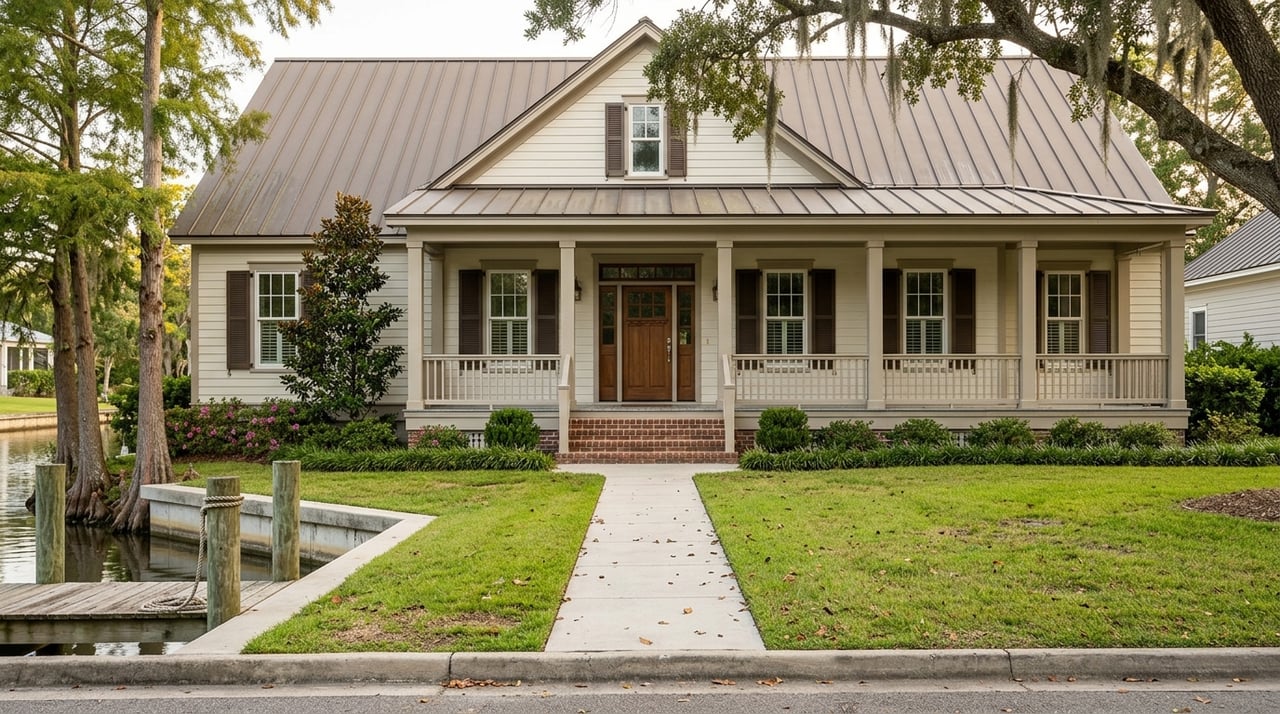
One of the most appealing parts of living near the water in Houma is that the homes often reflect local history and coastal building traditions. Houma’s historic district guidelines identify the bungalow as a common early 20th-century house form. These homes are known for features like wide eaves, large porches, and a horizontal feel that fits the local setting.
Louisiana historic preservation materials also point to French Creole forms such as single-story cottages and raised two-story houses as recurring regional housing types. In Houma, that helps explain why water-oriented areas can include a mix of cottages, bungalows, and raised homes rather than one standard style. The result is a housing stock that often feels established, personal, and tied to place.
That local character is especially noticeable in and around Houma’s older core. The Houma Restoration District Commission focuses on preserving character and encouraging compatible reinvestment. So if you are drawn to homes with architectural personality, front porches, and a sense of history, certain water-adjacent parts of Houma may feel especially appealing.
Expect Heat, Humidity, and Moisture Management
Living near the water in Houma also means adjusting to the climate. NOAA data for the Houma station shows an annual mean temperature of 69.6 degrees, annual precipitation of 65.42 inches, and essentially no snowfall. Summers are especially hot, with average daily highs around 91 degrees in July and August.
In practical terms, that means air conditioning, ventilation, and moisture control matter a lot. Homes near the water can require careful attention to airflow, exterior materials, and routine upkeep. Even if a home is beautiful and well located, you still want to understand how it handles the realities of warm, wet conditions.
This does not mean waterfront living is a burden. It just means buyers should think beyond curb appeal. A smart home search in Houma includes questions about drainage, maintenance history, and how the property performs in humid conditions.
Flood Questions Matter on Every Parcel
Flood planning is a normal part of the buying process in Houma, especially near canals, bayous, marshes, marinas, and other water features. Terrebonne Parish provides official flood maps, elevation certificate resources, and floodproofing information through its floodplain tools. FEMA’s Flood Map Service Center is also the official source for flood hazard mapping products.
The key point is simple: do not assume two nearby properties carry the same flood profile. Elevation, drainage patterns, and site conditions can vary a lot even within the same general area. If you are serious about a waterfront or water-adjacent home, parcel-level review is essential.
This is also where local guidance matters most. In a market like Houma, the best path is to verify a property’s flood-related details through the parish floodplain office and review any available elevation information tied to that specific address. A home’s relationship to the water should always be measured, not guessed.
Maintenance and Access Deserve a Closer Look
A home near the water may come with extra features or extra questions. You might be looking at a dock, canal frontage, nearby launch access, or a location close to a marina. Along with that can come practical concerns such as drainage, standing water, ditch maintenance, pump issues, or even questions about nearby marine traffic.
Terrebonne Parish service pages show just how normal these topics are in a canal-and-bayou community. The parish lists flooding and standing water, drainage service, ditch cleaning, pump-station issues, sewer overflow, mosquito spraying, and abandoned or sunken vessels as reportable matters. That does not mean every property will face these issues, but it does tell you what kinds of infrastructure questions belong in your due diligence.
When you tour homes, it helps to ask specific questions instead of broad ones. Ask how water access works, whether any docking features are included, what the drainage setup is like, and what buyers should verify with local offices before closing. The more specific the question, the more useful the answer.
The Lifestyle Is Both Recreational and Real
A common misconception is that living near the water in Houma is mainly about weekend fun. Recreation is certainly a big part of the appeal. Boating, fishing, and marina access are woven into the local lifestyle.
But Houma’s relationship with water goes well beyond leisure. The area’s shipyard and offshore marine ties, active working waterways, and coastal geography all shape the broader identity of the community. That gives waterfront living here a grounded, everyday quality that feels different from a purely resort-style market.
For many buyers, that blend is exactly the draw. You get the atmosphere and access that come with the water, but you are still living in a small city with a strong local identity, historic character, and practical community systems around it.
What Buyers Should Check Before Choosing a Home
If you are considering living near the water in Houma, it helps to go in with a clear checklist. The goal is not to avoid these homes. It is to evaluate them with local knowledge and realistic expectations.
Here are a few smart things to verify for any specific property:
- Flood zone and current flood map information
- Any available elevation certificate details
- Drainage conditions for the lot and nearby streets
- Canal, bayou, or marina access specifics
- Dock or boat-related features and whether they are usable as expected
- Public access rules for nearby launches, waterways, or refuge-adjacent areas
- General upkeep needs tied to humidity, moisture, and exterior exposure
When you understand those details early, you can compare homes more confidently. It also helps you separate a great fit from a property that may look appealing at first glance but come with conditions that do not match your goals.
Living near the water in Houma can be rewarding, distinctive, and deeply connected to the way this community works. The key is knowing that the lifestyle comes with both charm and responsibility. If you want help sorting through property-specific questions and finding a home that fits the way you want to live, Good Earth Realty Houma is here to help.
FAQs
What is everyday life like near the water in Houma?
- Water is part of everyday life in Houma because the area is shaped by bayous, canals, wetlands, and Gulf access, with boating, marine work, and waterfront infrastructure built into the local routine.
Are homes near the water in Houma always elevated?
- No, elevation should be treated as property-specific, although local historic housing types do include some raised forms.
What kinds of homes are common near the water in Houma?
- Buyers may see a mix of bungalows, cottages, and some raised traditional forms, especially in older or more historic parts of Houma.
Is living near the water in Houma mostly about recreation?
- No, while boating and fishing are major lifestyle benefits, water also shapes Houma’s work culture, transportation links, and overall community identity.
How can you verify flood information for a Houma property?
- You can check official parcel-related flood information through Terrebonne Parish floodplain resources and review available elevation and flood map details for the specific address.
What should you ask about a waterfront or water-adjacent home in Houma?
- Ask about flood zone details, drainage, elevation information, water access, dock features, nearby launch rules, and maintenance needs tied to humidity and moisture.
Are there public boating and fishing access points near Houma?
- Yes, examples include the Houma Downtown Marina and the public Island Road boat launch at Pointe-aux-Chenes Wildlife Management Area.
Why does local guidance matter when buying near the water in Houma?
- Local guidance matters because each parcel can have different flood, drainage, access, and maintenance conditions, even when homes are close together.